DevelopingAnthropic's IPO: China orders rebuffed, $900.9 billion in compute commitments and a '10th percentile' capacity plan. What to read before Wednesday's pricing
Six-times oversubscribed with a whole region excluded, and a CEO who says the hardest problem is guessing how many chips to buy: the two numbers that matter are $70.7 billion due by September 2027 and the spot market Amodei is relying on.
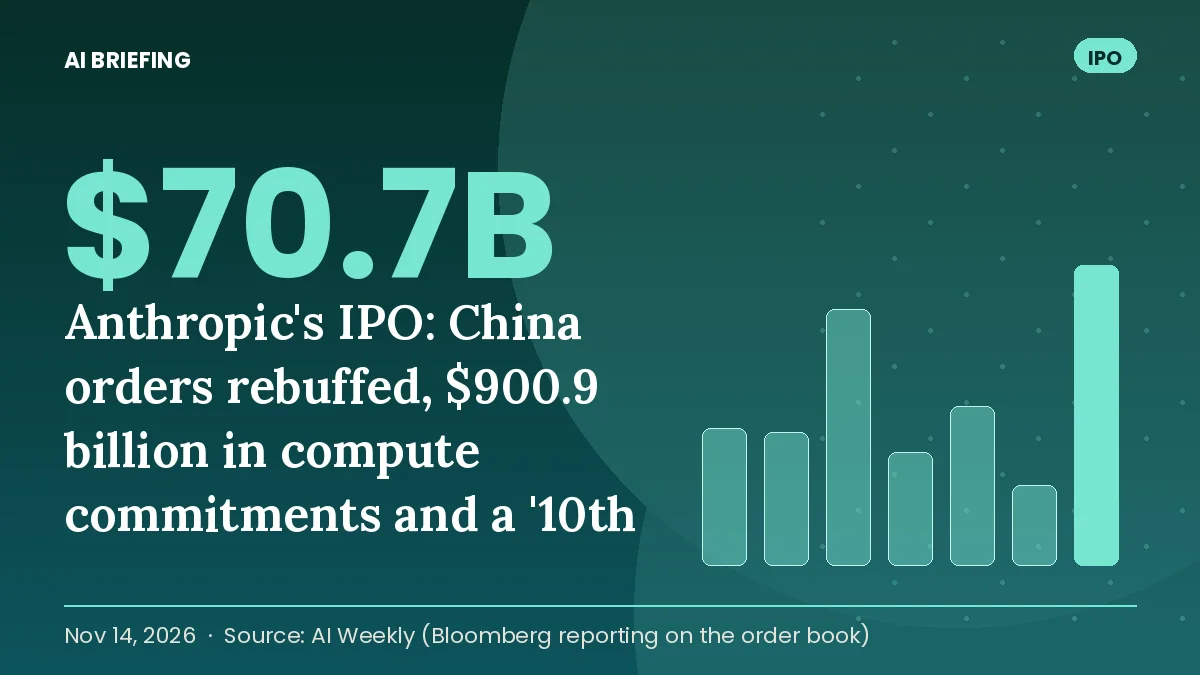
Anthropic prices its initial public offering on Wednesday, November 18, and is expected to trade on Nasdaq as ANT the next day at $70 to $78 a share. Two reports on Friday filled in the parts of the story the prospectus leaves implicit: who is allowed to buy, and how the company thinks about the thing it spends most of its money on.
Who is in the book
Bloomberg reported that syndicate banks are refusing or discouraging orders from mainland Chinese and Hong Kong institutions, citing US International Traffic in Arms Regulations. Several banks have either declined the orders or told clients they are unlikely to get allocations. The amended registration statement says Anthropic's models, platform and applications 'may be controlled' under Commerce Department rules, including the Export Administration Regulations or ITAR, which is the legal hook. The same approach was used for SpaceX's $86.2 billion listing earlier this year, where investors in those regions could buy only once secondary trading began.
It has not dented demand. Orders are reportedly around six times the shares on offer. Goldman Sachs and Morgan Stanley lead a 22-bank syndicate; the midpoint of the range implies a valuation near $1 trillion and roughly $61 billion raised, with a separate $26 billion private placement at the IPO price alongside. Anthropic emailed and then retracted an earlier version of the terms on November 9, saying the figures were inaccurate, before filing the $70–$78 range.
The compute dilemma, in Amodei's words
At a livestreamed conversation with Jamie Dimon at JPMorgan's headquarters on Friday, Dario Amodei called compute 'the deepest business dilemma that the company faces'. Buy too much and you overextend; buy too little and you cannot serve inference when demand arrives. His description of the policy is the useful part. Anthropic deliberately commits to a modest amount of capacity in advance, planning around roughly the 10th percentile of its growth scenarios, and buys more on the spot market when demand runs ahead. Spot capacity, he said, has always been there and he expects it to stay that way; he compared the approach to insurance and said the company wants to 'underpromise and overdeliver'.
The filing puts numbers on the modest end of that policy: $900.9 billion in compute-related commitments running to 2045, about $451.6 billion of it before 2030, and $70.7 billion due in the year to September 30, 2027. Compute costs reached 48% of revenue in one 2026 quarter. The prospectus does not name a backstop if spot availability fails.
The counter-argument
Planning at a low percentile and flexing on spot is what a disciplined operator does when hardware depreciates fast and demand is uncertain; the alternative, which some rivals have chosen, is to commit to everything and hope revenue arrives. If the spot GPU market stays liquid through 2030, and Nvidia's new management and the neocloud IPO pipeline suggest supply keeps coming, the policy looks prudent rather than fragile. Six-times coverage says most institutions have reached that conclusion.
What to watch
The print on Wednesday relative to the range, and whether the private placement participants, reportedly including Google, Nvidia, AMD, Broadcom, Micron, Microsoft and TSMC, are confirmed at the IPO price. The first-day trading on Thursday, with China and Hong Kong investors able to buy only then. The lock-up calendar, which determines when the $26 billion placement and employee shares can move. And one line in the first quarterly report as a public company: compute as a share of revenue. If it falls from 48%, the 10th-percentile plan is working; if it rises, the spot market is charging for the insurance.
Sources
AI Weekly (Bloomberg reporting on the order book) ↗Bloomberg ↗TradingView / Stocktwits (Amodei at JPMorgan) ↗The story so far
- Nov 13, 2026 Huang resigns from Nvidia: what the 8-K says, what the 14% intraday drop prices in, and why November 17 now matters more
- Nov 12, 2026 OpenAI's $10 billion quarter came with a $10.9 billion loss: what the leaked numbers say next to Anthropic's S-1
- Nov 11, 2026 Anthropic's IPO range is $70–78: what the amended S-1 says about dilution, lock-ups and the $26 billion partner placemen…
- Nov 10, 2026 SoftBank's $7 billion loss lands on the day Anthropic starts selling a $1.1–1.3 trillion IPO
Key terms in this story
- Inference Running a trained model to produce output. What you pay for when you call an API.
- Technology export catalogue (China) China's list of technologies whose export is prohibited or requires a licence, maintained by MOFCOM and MOST; a 2026 draft adds 23 AI technologies.
- GPU Graphics processing unit: the chip type, dominated by Nvidia, that performs the parallel arithmetic AI training and inference require.
More in Finance & markets
All →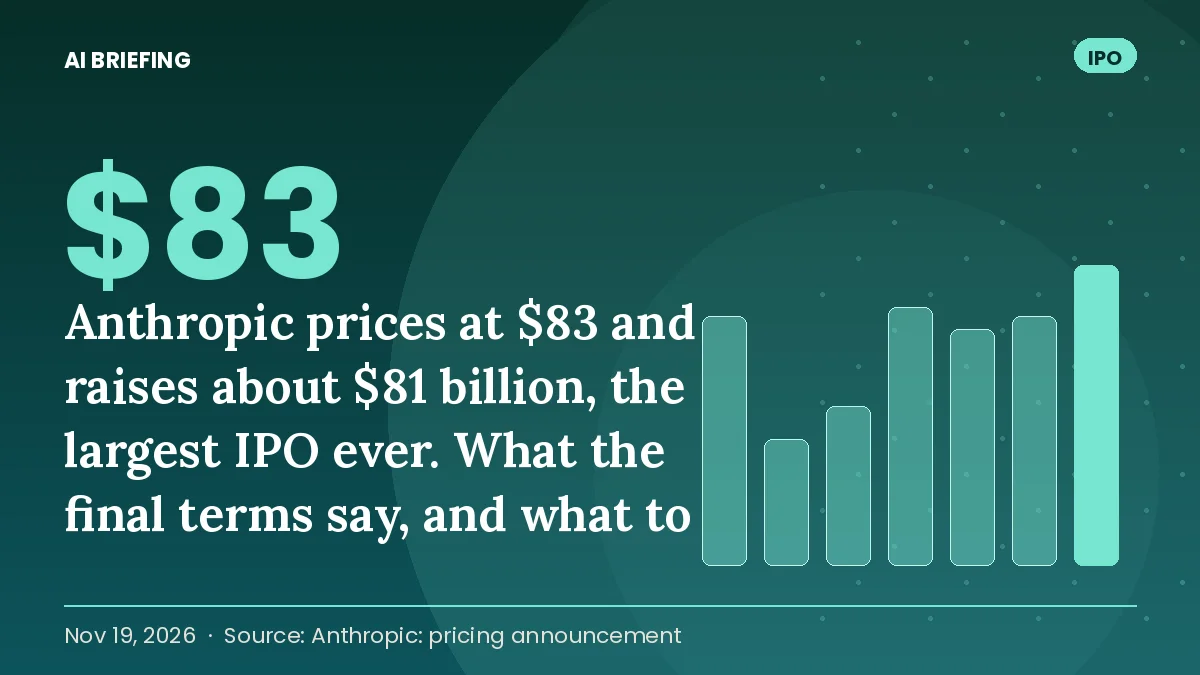
Anthropic prices at $83 and raises about $81 billion, the largest IPO ever. What the final terms say, and what to watch when ANT opens today
The price landed $5 above the top of the range and the share count grew, which tells you how the book filled; the prospectus numbers tell you what the…
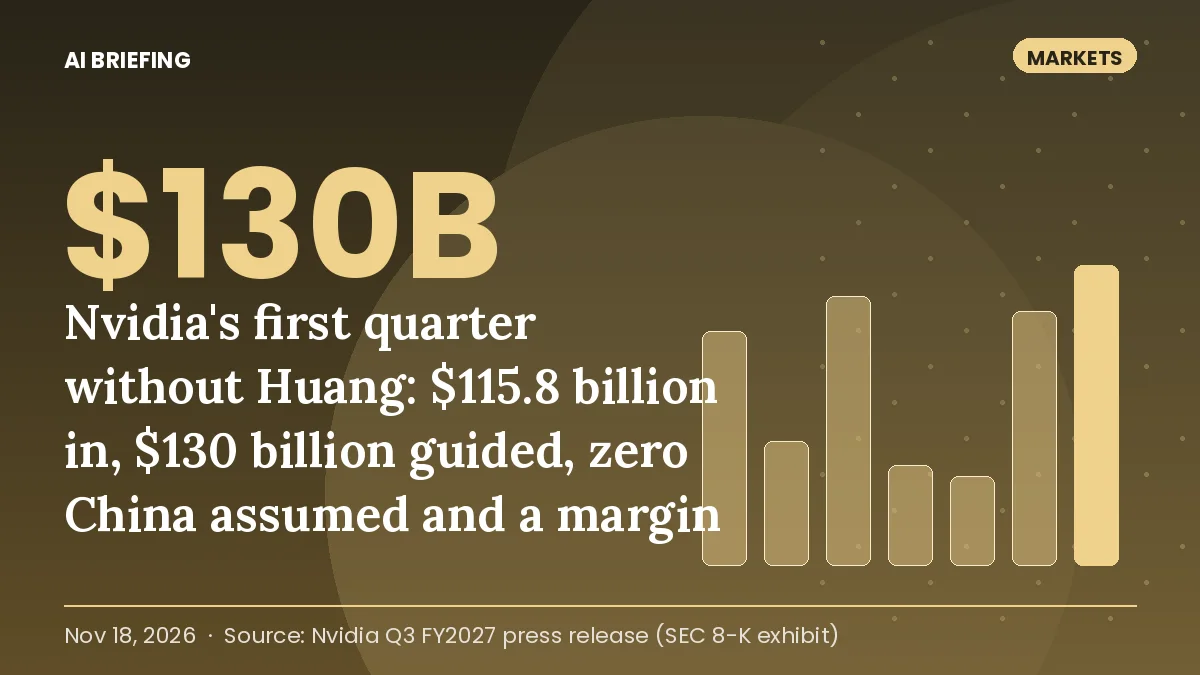
Nvidia's first quarter without Huang: $115.8 billion in, $130 billion guided, zero China assumed and a margin that falls to 71%. What the numbers say about 2027
The beat was expected; the shape of the guide was not. Nvidia is now telling investors that the next quarter will be bigger, less profitable per dolla…
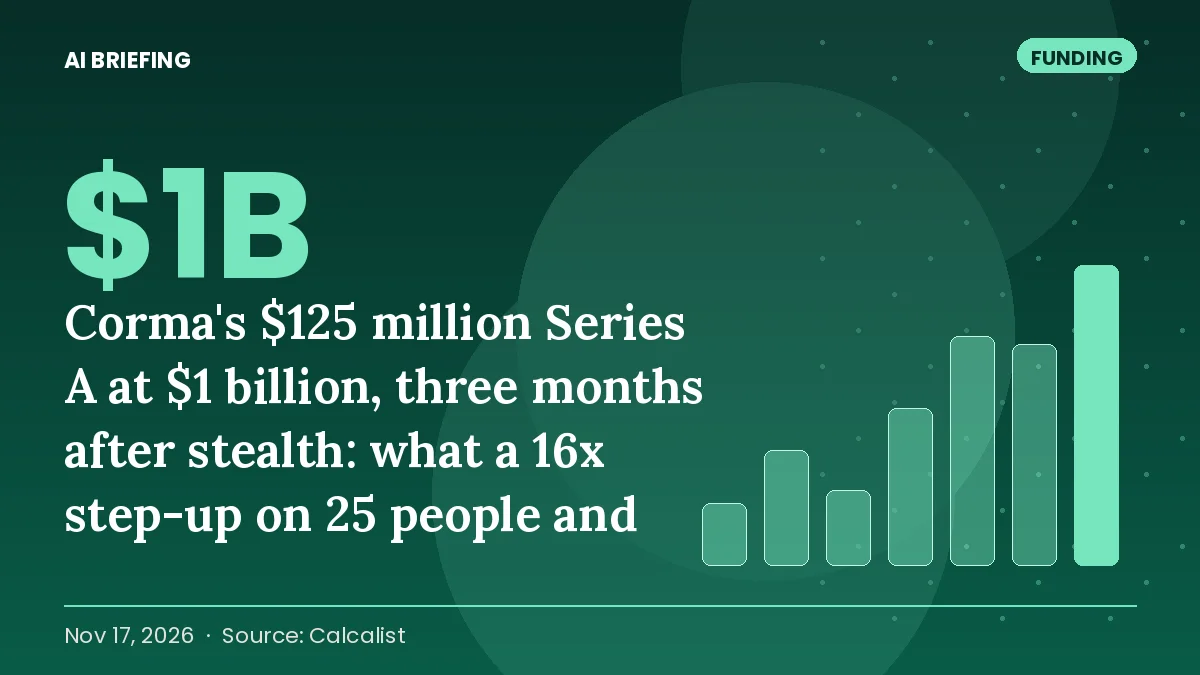
Corma's $125 million Series A at $1 billion, three months after stealth: what a 16x step-up on 25 people and undisclosed revenue says about the defensive-AI market
NEA has priced a defensive cybersecurity foundation-model lab as a unicorn before it has named a customer, betting that the autonomous attack tools in…
Get the brief in your inbox
One email every morning: the stories that mattered in AI, each with a one-line "why it matters" for your role. Free, no ads, unsubscribe any time.
Published daily by AI Briefing. We never share your address.