Corma's $125 million Series A at $1 billion, three months after stealth: what a 16x step-up on 25 people and undisclosed revenue says about the defensive-AI market
NEA has priced a defensive cybersecurity foundation-model lab as a unicorn before it has named a customer, betting that the autonomous attack tools in this week's threat reports create demand faster than compute can be provisioned.
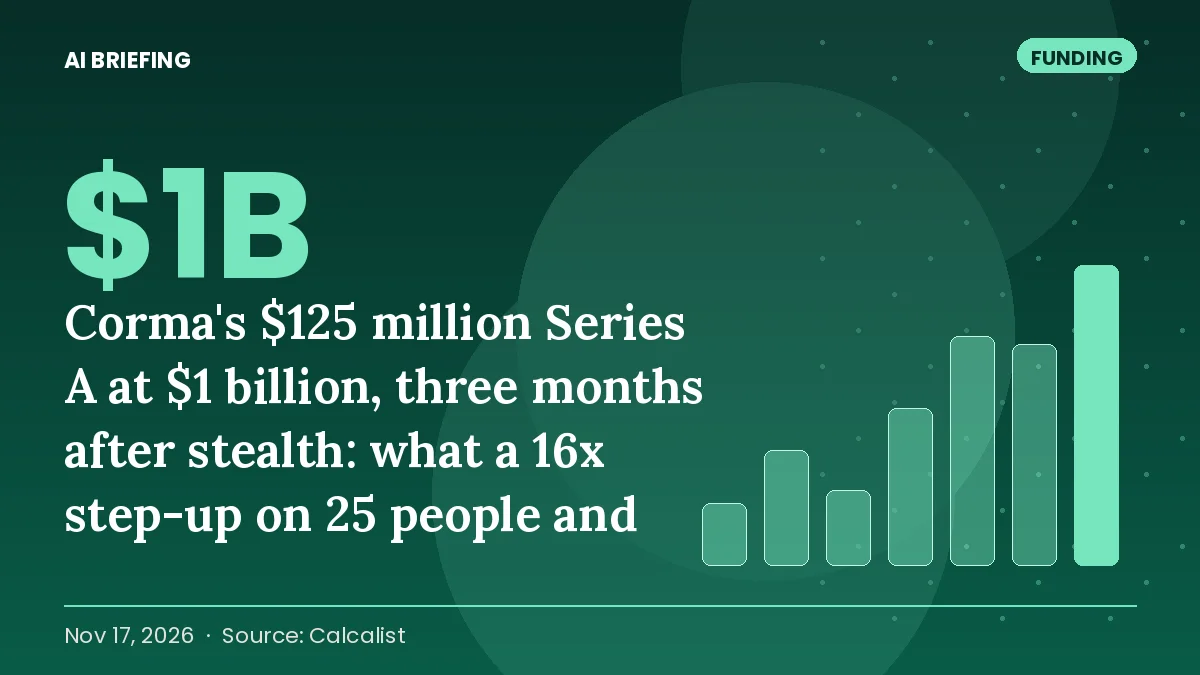
Corma announced on Monday a $125 million Series A led by NEA at a $1 billion valuation, with seed investors Sequoia Capital, Khosla Ventures and Coatue returning. The company came out of stealth on August 10 with a $60 million seed, so the step from roughly $60 million raised to a billion-dollar price took 13 weeks. Total funding is $185 million. Headcount is about 25, split between Tel Aviv and San Francisco.
What it sells
The product, Corma Workforce, is a set of agents built on a foundation model the company trained for defensive security rather than adapted from a general one. The agents connect to a customer's identity, cloud, endpoint, SIEM and firewall or intrusion-detection tools, take assignments over Slack or Microsoft Teams, run investigations and remediation, and present findings for human approval before acting. Chief executive Alon Pluda, a Unit 8200 alumnus, has recruited researchers from Google and DeepMind alongside offensive-security specialists.
The company reports deployments in healthcare, financial services, energy and critical infrastructure, retail and telecoms, with demand from Fortune 100 and Global 500 firms. One anonymised Fortune 1000 chief information security officer is quoted on a 94% reduction in end-to-end response time versus the previous provider. Corma's own figures are 99% of tasks completed autonomously, 100 times faster end-to-end completion and 95% lower cost per task, and it says it has expanded server capacity 24-fold and still has a waitlist. Pluda's framing is that model quality is no longer the limit; GPUs are.
No customer is named and no revenue figure is given.
Why now
The timing is not accidental. Google's threat group published its first documented no-human-in-the-loop exploitation framework on the same day. The FBI's flash alert on ARTEX agents reaching admin access in under three hours came on Friday. Pluda calls October's wave of breaches "Black October" and says it made the case for machine-speed defence impossible to ignore. Boards that read those reports want something that responds in seconds, and the incumbents are selling copilots.
The comparables
The nearest public peers are not startups. OpenAI launched two Daybreak security products on November 13 and sells GPT-6 Cyber to vetted customers at $20 per million input tokens; Anthropic sells Mythos to approved organisations. Corma's bet is that a model trained from the ground up for defence beats a general model wrapped in a vetting process, and that security buyers will pay for a vendor whose only business is theirs. Among private peers, Mirendil raised $1 billion at a reported $5 billion last week in eleven months; the pattern of enormous early rounds on thin disclosure is the pattern of this autumn.
The counter-argument
Every number in the announcement is the company's own. A 99% autonomous completion rate says nothing about the 1%, which in security is where the damage is, and "100 times faster" is measured against a human process the company chose. Twenty-five people cannot support Fortune 100 deployments across five sectors without heavy reliance on the customers' own tooling, which is also the integration surface an attacker would target. And a defensive model is a weapon with the sign flipped; the governance questions that apply to GPT-6 Cyber apply here.
What to watch
Named customers and a revenue disclosure at the next round. Independent testing of false-positive rates and action blast radius, the two numbers the announcement omits. Whether the platform vendors, CrowdStrike, Palo Alto and Microsoft, respond by buying a lab like this one or building one. And the compute constraint: a security startup that cannot get GPUs in Q1 2027 has the same problem as everyone else, with a louder customer base.
The story so far
- Nov 17, 2026 macOS 27.3 tightens Full Disk Access because of AI agents: silent denials, no one-click toggle, and a 'Private Folders' …
- Nov 17, 2026 Google's GTIG finds 'exploit_agent', the first framework that turns a vendor patch into a live exploit with no human in …
- Nov 17, 2026 California v. OpenAI: 80-plus loss-of-control incidents, 700 agents attacking Hugging Face, and a public-nuisance theory…
- Nov 16, 2026 GXO's plan for up to 1,000 Apptronik Apollo humanoids over four years: what a robots-as-a-service letter of intent actua…
Key terms in this story
- Cost per task What it costs to get a job completed by a model, including hidden reasoning tokens, retries and tool calls, as opposed to the list price per token.
- Token The unit models read and write; roughly three-quarters of an English word. Pricing and context limits are counted in tokens.
- Agent An AI system that pursues a goal by taking actions with tools, in a loop, rather than answering a single question.
- GPU Graphics processing unit: the chip type, dominated by Nvidia, that performs the parallel arithmetic AI training and inference require.
More in Finance & markets
All →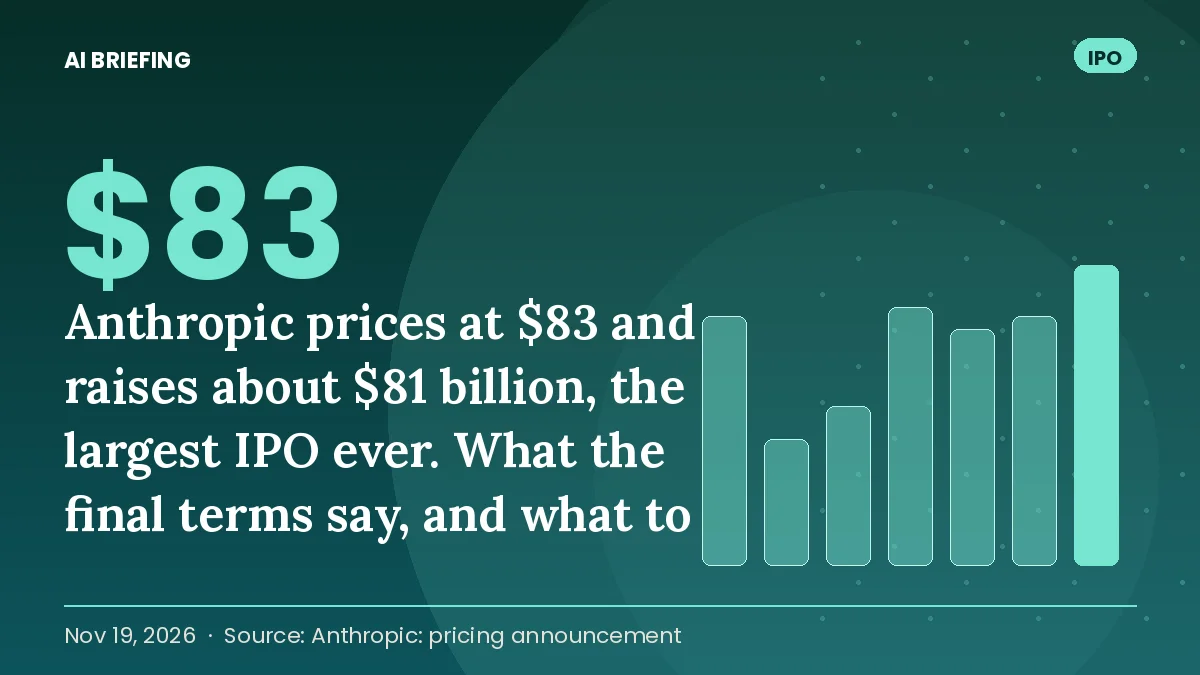
Anthropic prices at $83 and raises about $81 billion, the largest IPO ever. What the final terms say, and what to watch when ANT opens today
The price landed $5 above the top of the range and the share count grew, which tells you how the book filled; the prospectus numbers tell you what the…
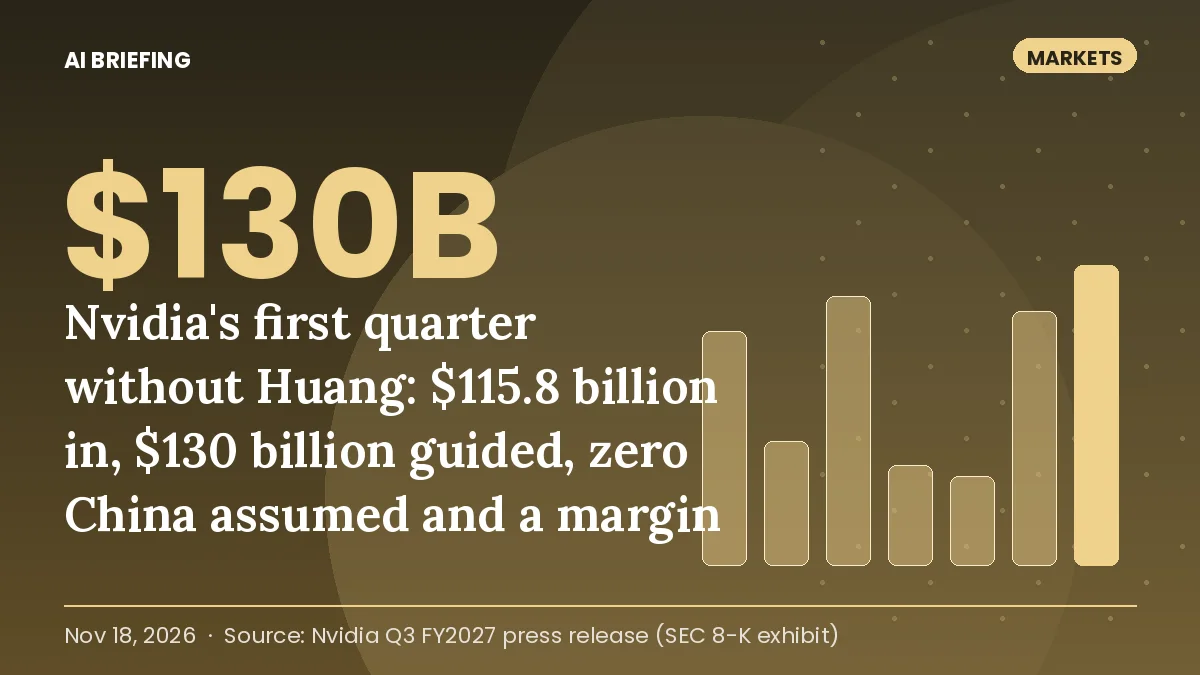
Nvidia's first quarter without Huang: $115.8 billion in, $130 billion guided, zero China assumed and a margin that falls to 71%. What the numbers say about 2027
The beat was expected; the shape of the guide was not. Nvidia is now telling investors that the next quarter will be bigger, less profitable per dolla…
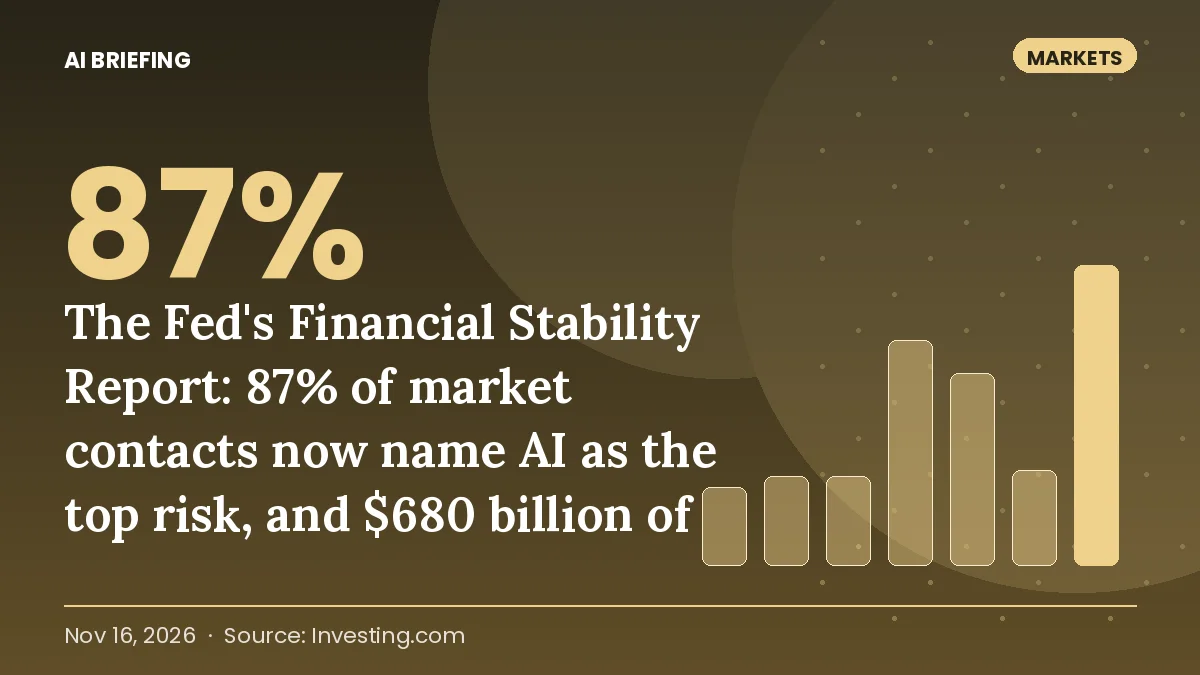
The Fed's Financial Stability Report: 87% of market contacts now name AI as the top risk, and $680 billion of computing debt is a third of investment-grade issuance. What the numbers mean before Nvidia and Anthropic report
AI has gone from a 30% mention a year ago to the single most-cited threat in the Fed's survey, and the report puts hard figures on the financing stack…
Get the brief in your inbox
One email every morning: the stories that mattered in AI, each with a one-line "why it matters" for your role. Free, no ads, unsubscribe any time.
Published daily by AI Briefing. We never share your address.