Anthropic's Claude Ship puts an agent on the whole pull request: PR Steward fixes CI, Approvals can merge-approve, and /ship opens the PR. What engineering leads should configure first
Code Review was the easy part; the new beta lets an agent act on the findings and, under a policy file you write, approve routine changes without a human, which makes the policy file the most important code in your repo.
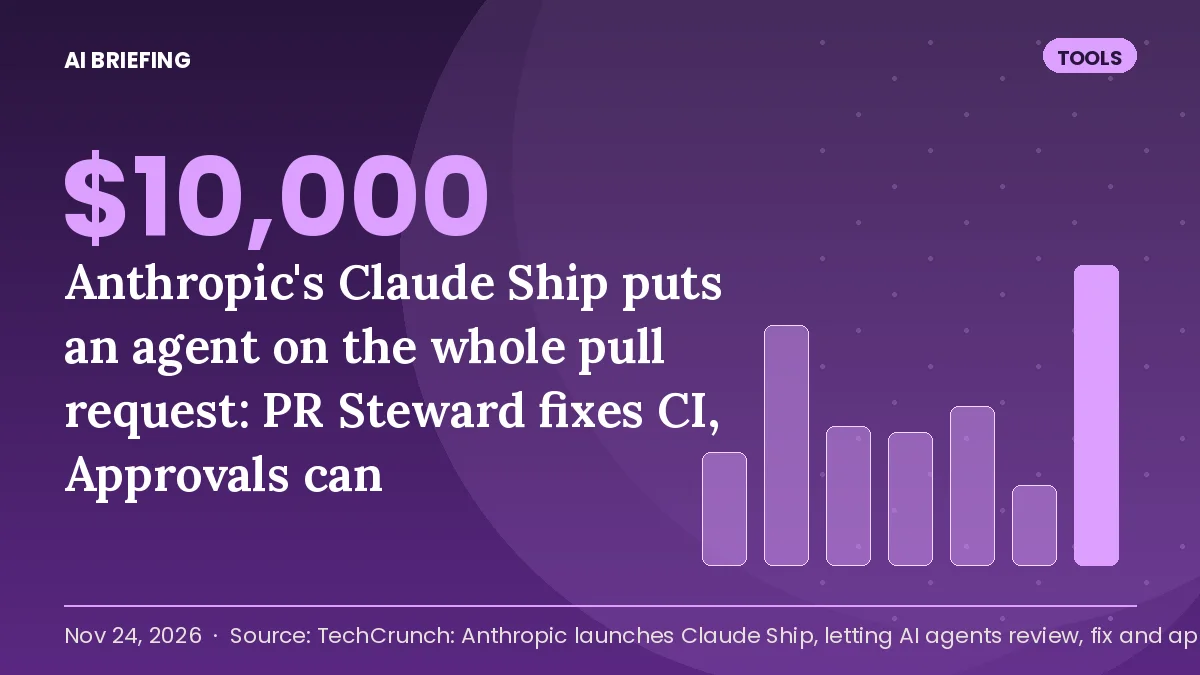
Anthropic on Monday bundled three GitHub-native capabilities into a beta it calls Claude Ship. Code Review, generally available since October 15, reads a pull request and posts findings. PR Steward, new and in beta, acts on them: it fixes failing CI checks, resolves merge conflicts, responds to reviewer comments, and after every push leaves a comment explaining what changed and how to roll it back. Claude Approvals, also beta, applies an approval policy written in plain language and stored in the repository, and can approve routine changes or escalate them to named humans. A new /ship command in the Claude Code CLI and desktop app chains the lot: push, open the PR, review, iterate until checks pass.
Availability is Claude Team and Enterprise on GitHub repositories only. Organisations with zero-data-retention, HIPAA or customer-managed-key configurations are excluded for now. Review and Steward are billed on token usage under admin-set monthly limits; /ship counts toward normal Claude Code usage. Eligible Enterprise customers can claim at least $10,000 of Claude Ship credits until January 15, 2027.
The boundaries Anthropic drew
PR Steward cannot approve or merge. Claude Approvals can approve, but only within the policy file, which takes effect once it is on the default branch, and GitHub branch protection still applies on top. Anthropic recommends starting in observe-only mode on a single repository with a spend limit, and says the policy can take Code Review findings and custom classifiers as inputs. A developer steers the agent with @claude in PR comments and stops it with @claude stop. Anthropic's internal evidence is that merged pull requests on the Claude Code team more than doubled from June to September while the share of reverted PRs fell by more than 40%; the company quotes itself, so treat it as a vendor claim.
Why the policy file is the real product
This is the first mainstream release in which an agent's output can satisfy a required review on a protected branch. In GitHub's model, a required approval is a security control; CODEOWNERS and branch protection exist to keep a single compromised account from shipping code alone. A natural-language policy that auto-approves, say, dependency bumps and documentation changes is reasonable. The same file with a loosely worded clause is a path from a prompt injection in a PR description to an approved merge. The site's security coverage of the last fortnight, the Microsoft Agent Framework PyPI poisoning and the Together AI credential leak, both started with an agent doing something plausible inside a repository.
The counter-argument
Teams already run auto-merge for Dependabot and have for years; the novelty is scope, not kind. And the alternative to agent approval is review queues that stretch for days while agents write most of the code, which is the situation Anthropic says it was in. The question is not whether to allow it but what is routine enough to allow.
What to do
Enable Code Review only for the first two weeks and measure how many findings reviewers act on. Add PR Steward on one repository with a monthly cap and watch the rollback comments; they are the audit trail. Before you turn on Approvals, put the policy file under CODEOWNERS, require two human reviews for changes to it, keep the GitHub rule that a human approval is still required on anything touching auth, payments or infrastructure, and run observe-only mode until you can list what the agent would have approved and agree with every line. Then expand by file path, not by repository.
Sources
TechCrunch: Anthropic launches Claude Ship, letting AI agents review, fix and approve code changes ↗TestingCatalog: Anthropic launches Claude Ship to review and approve PRs ↗Claude Code docs: Code Review ↗The story so far
- Nov 24, 2026 OpenAI and Cisco release Shirudo, an open-source eBPF shield for unpatched Linux, as CISA confirms AI agents exploited a…
- Nov 23, 2026 Together AI confirms a coding agent leaked customer prompts; OpenRouter drops three providers and pulls zero-data-retent…
- Nov 23, 2026 OpenAI's new usage policy took effect Friday: routers and gateways need approval, outputs cannot train substitute models…
- Nov 19, 2026 Perplexity's Brain: an agent memory that records its own work and rewrites its skills overnight, with correctness up 25%…
Key terms in this story
- Prompt injection An attack in which text the model reads, such as a web page or email, contains instructions that hijack its behaviour.
- Network token (payments) A substitute card number issued by Visa, Mastercard or American Express for one transaction or merchant, so the real card details never reach the merchant or the software making the purchase.
- Token The unit models read and write; roughly three-quarters of an English word. Pricing and context limits are counted in tokens.
- Agent An AI system that pursues a goal by taking actions with tools, in a loop, rather than answering a single question.
More in Developer tools
All →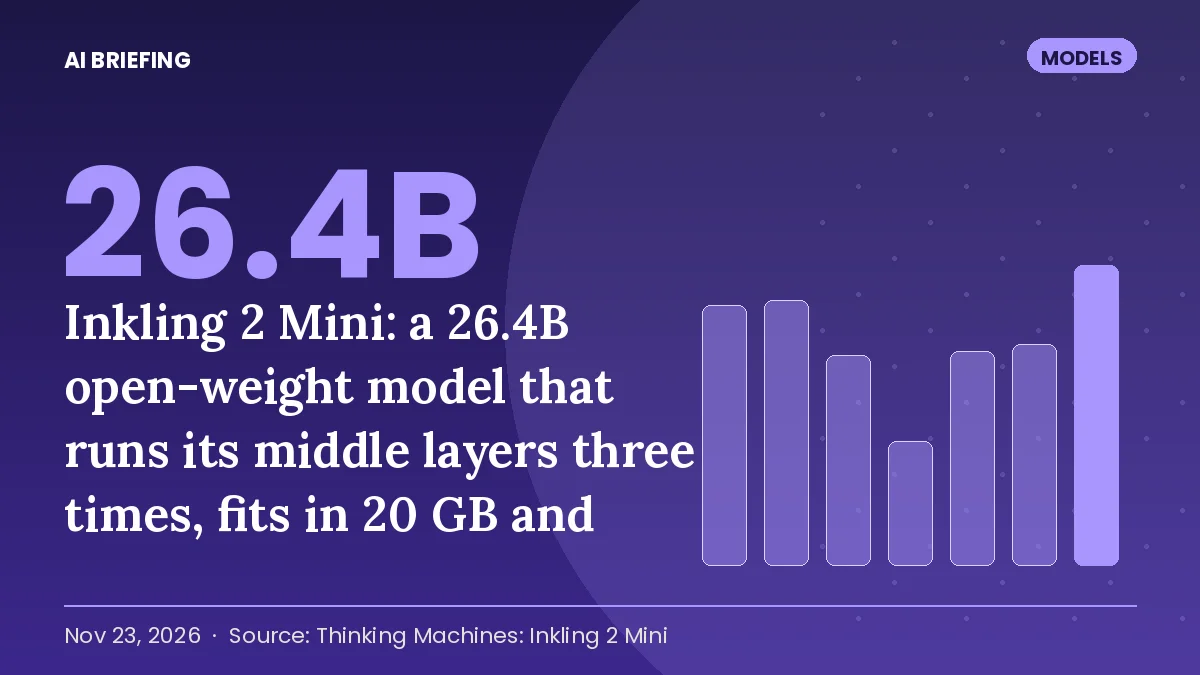
Inkling 2 Mini: a 26.4B open-weight model that runs its middle layers three times, fits in 20 GB and scores 79.2% on SWE-bench Verified. What developers get, what it costs on Tinker, and where it falls short
Thinking Machines' smallest model is the first mainstream release built around looping rather than depth, and it lands on a Mac with 32 GB of memory u…
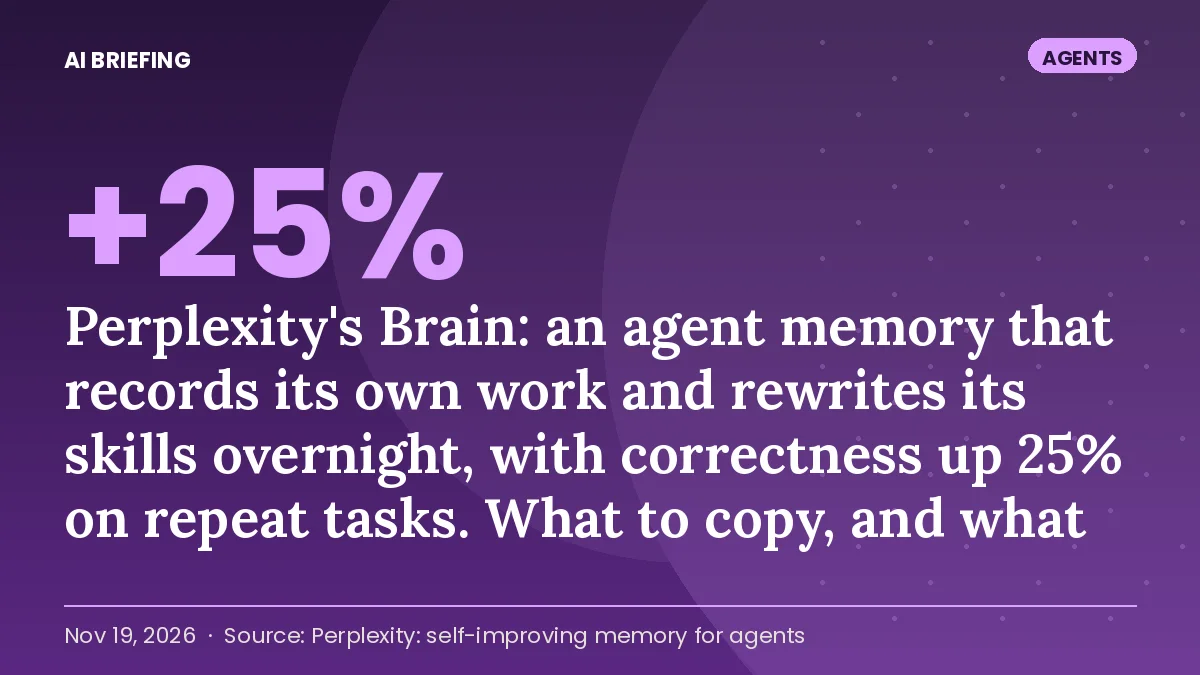
Perplexity's Brain: an agent memory that records its own work and rewrites its skills overnight, with correctness up 25% on repeat tasks. What to copy, and what to guard
Memory about the user is old news; memory about what the agent did, what failed and what was corrected is the new layer, and it is also a new place fo…
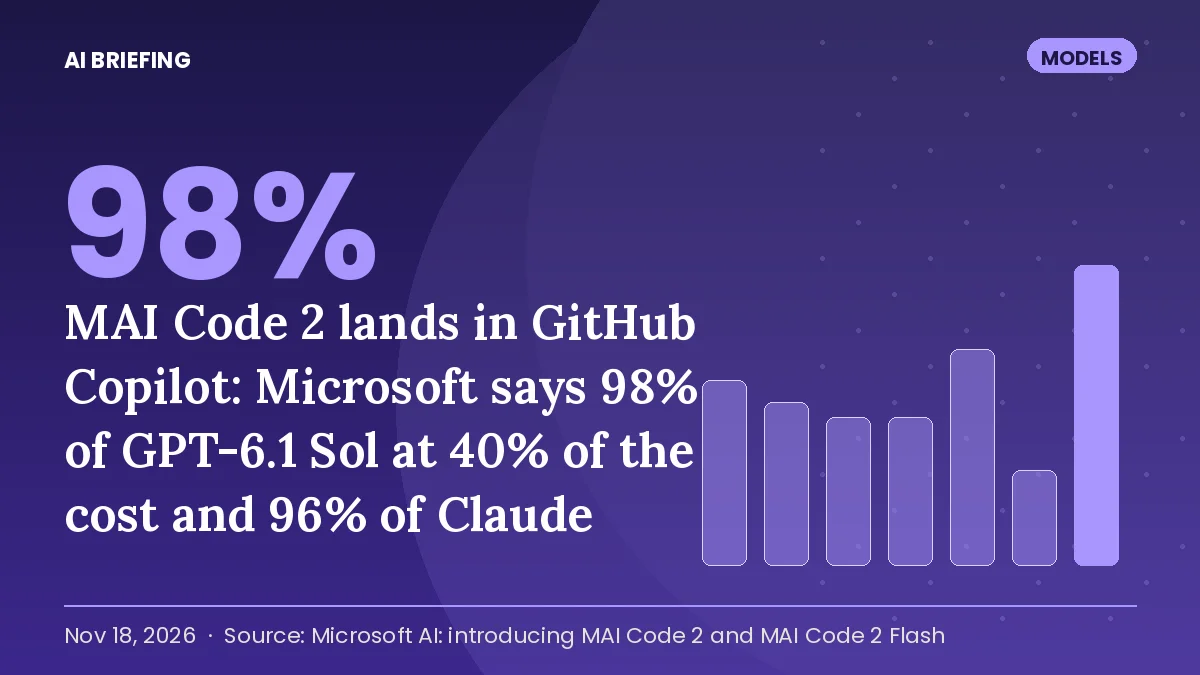
MAI Code 2 lands in GitHub Copilot: Microsoft says 98% of GPT-6.1 Sol at 40% of the cost and 96% of Claude Opus 5.5 at 5%. What the claims hide, and what Ignite changed for anyone building agents
Microsoft now ships its own frontier-adjacent coding model inside the subscription it already sells, and starts metering agent run-time in Foundry on …
Get the brief in your inbox
One email every morning: the stories that mattered in AI, each with a one-line "why it matters" for your role. Free, no ads, unsubscribe any time.
Published daily by AI Briefing. We never share your address.