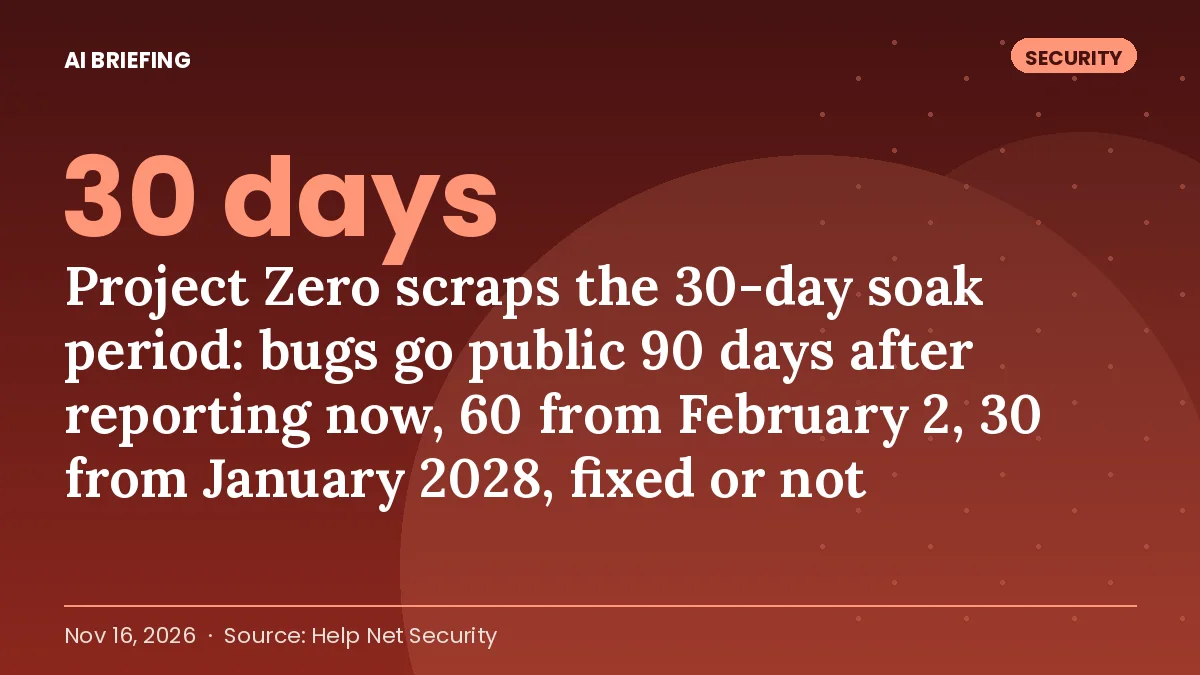
Project Zero scraps the 30-day soak period: bugs go public 90 days after reporting now, 60 from February 2, 30 from January 2028, fixed or not
Google's Project Zero published its 2026 disclosure policy on November 13, replacing the '90 + 30' rules in place since 2021 with 'Full X': details are released X days after the vendor is told, regardless of fix status, severity or variants. The team's stated reason is that LLM tooling lets attackers find bugs and turn patches into exploits almost immediately, so patch soak time is 'no longer meaningful', and that it now finds several vulnerabilities a week where it once found a few a year. Vendors objected that a hard clock would expose unfixed bugs and push them to fix Project Zero's reports ahead of worse ones; the phased schedule is the compromise. In-the-wild bugs stay on Google's seven-day policy.
SecurityMeasure your patch SLA for browsers, operating systems, hypervisors and common libraries against a 30-day total from vendor notification. Subscribe to Project Zero's Reporting Transparency list, which names the product within a week of the report, and map each entry against your inventory with its expected publication date.
ExecutivesProject Zero's policies became the industry norm in 2015 and 2021. Expect other researchers, AI bug-finding platforms and regulators to adopt the same clock, and ask vendors in the next review how fast they can ship a fix or a mitigation.
DevelopersThe mechanisms Project Zero says it expects vendors to build are feature flags, input filtering, authenticated alternate update channels and hotpatching. If you cannot turn a code path off in production without a release, start there.
ML engineersThe policy is a direct consequence of model-assisted vulnerability discovery scaling faster than fixing: the CSA notes only 97 of 1,596 AI-found open-source bugs reported under Project Glasswing had confirmed patches by May.
BeginnersGoogle's elite bug-hunting team will now publish details of a software flaw on a fixed timetable even if the maker has not fixed it, because AI has made attackers fast enough that waiting no longer protects anyone. The timetable shrinks to 30 days by 2028.