Anthropic's reported $3.4B generator buy makes power a capital expense for AI labs
Taking over 1.7 gigawatts of Caterpillar orders is the biggest known power-equipment purchase by an AI company. It tells you how the labs now think about the grid.
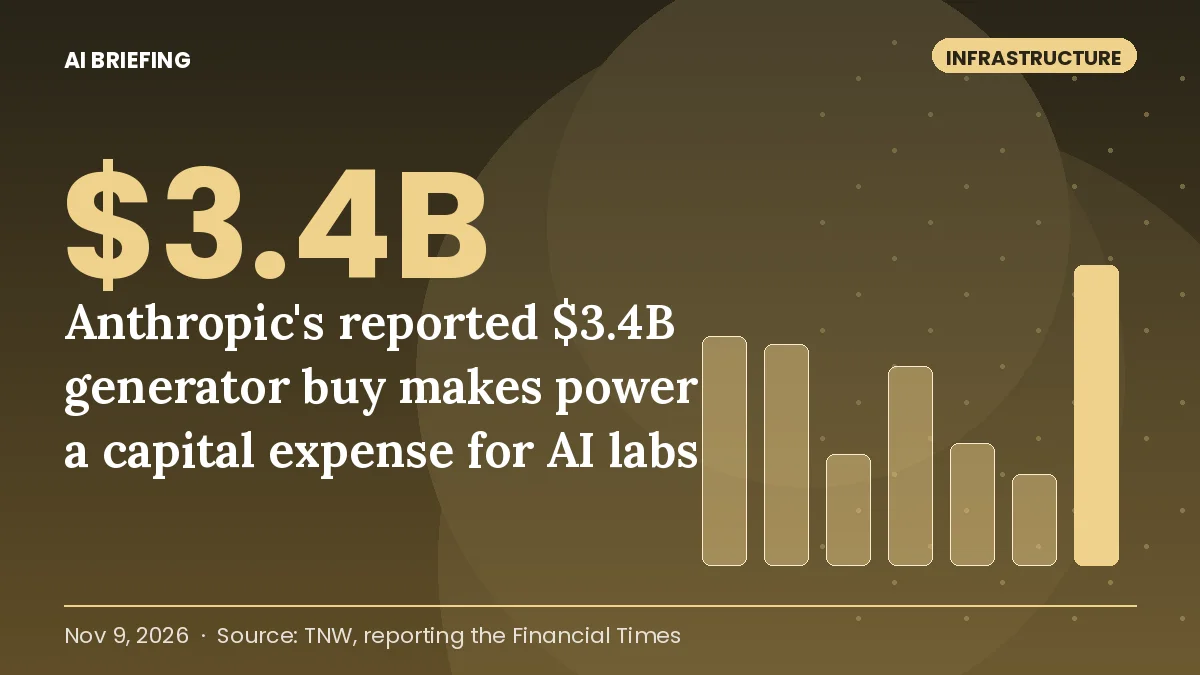
The Financial Times reported on Sunday that Anthropic agreed in late September to pay about $3.4 billion for roughly 1.7 gigawatts of gas-fired generators, taking over orders that OnePWR Solutions, a San Antonio power developer, had placed with Caterpillar about two years ago. The FT cited one person with knowledge of the deal; both companies declined to comment. We have not independently confirmed it, and the figures should be read as reported.
The structure matters as much as the size. OnePWR had the orders but needed capital to complete them. Anthropic had planned to buy power from OnePWR as a customer, then instead took over both the equipment orders and the installation work. No company was acquired and no staff moved. In effect, a model developer stepped into the shoes of a power developer because that was faster than waiting for one.
Why 1.7 gigawatts is a big number
A gigawatt is roughly the output of a large nuclear reactor. Today's largest AI training campuses are planned in the 1 to 2 gigawatt range, so this single order is on the scale of one flagship site's entire power budget. The FT described it as the largest known single purchase of power equipment by an AI company, a title previously associated with xAI's turbine deployments at its Memphis and Southaven sites, the Memphis installation having drawn a lawsuit over permitting and emissions.
The economic logic is straightforward. In most US markets, connecting a new large load to the grid now takes years. Buying reciprocating gas generators converts an open-ended wait into a delivery schedule, at the cost of owning a fleet of machines and the gas supply, air permits and operations that come with them. For a company whose amended IPO filing lists about $895 billion in commitments, almost all for compute and infrastructure, $3.4 billion to make a slice of that compute usable on time is a rounding error with outsized leverage.
What it signals about the IPO
Anthropic begins marketing its listing this week, and the S-1 has already been read closely for what it admits about energy. A frontier lab buying gas generation outright will be framed two ways. Investors will see a company securing physical capacity rather than relying on partners, which supports the revenue trajectory it is selling. Critics will see a lab that has talked about safety and responsibility choosing fossil generation at scale, days after voters in several states backed measures restricting data-centre development and after OpenAI pledged to cover the full cost of power and grid upgrades for its own sites.
Both readings can be true. The practical point for anyone modelling the sector is that power has moved from an operating cost that utilities deliver to a capital asset that labs buy, own and depreciate. That changes the shape of their balance sheets, the comparables analysts should use, and the political constituency the labs have to manage.
The counter-argument
Owning generation is not obviously the winning strategy. Gas prices are volatile, air permits are increasingly contested, and utilities in several states are moving toward tariffs that make large loads pay for their own grid upgrades, which would narrow the time advantage of self-generation. Hyperscalers with decades of utility relationships may still get to the grid faster than a lab with a fleet of Caterpillars and a two-year-old operations team.
What to watch
Where the generators go. Anthropic has not said, and siting will determine the permitting fight and the local politics. Watch for an updated S-1 amendment that reflects the deal, for Caterpillar's next earnings commentary on data-centre backlog, and for whether OpenAI, Google or Meta follow with equipment purchases of their own rather than power-purchase agreements.
More in Finance & markets
All →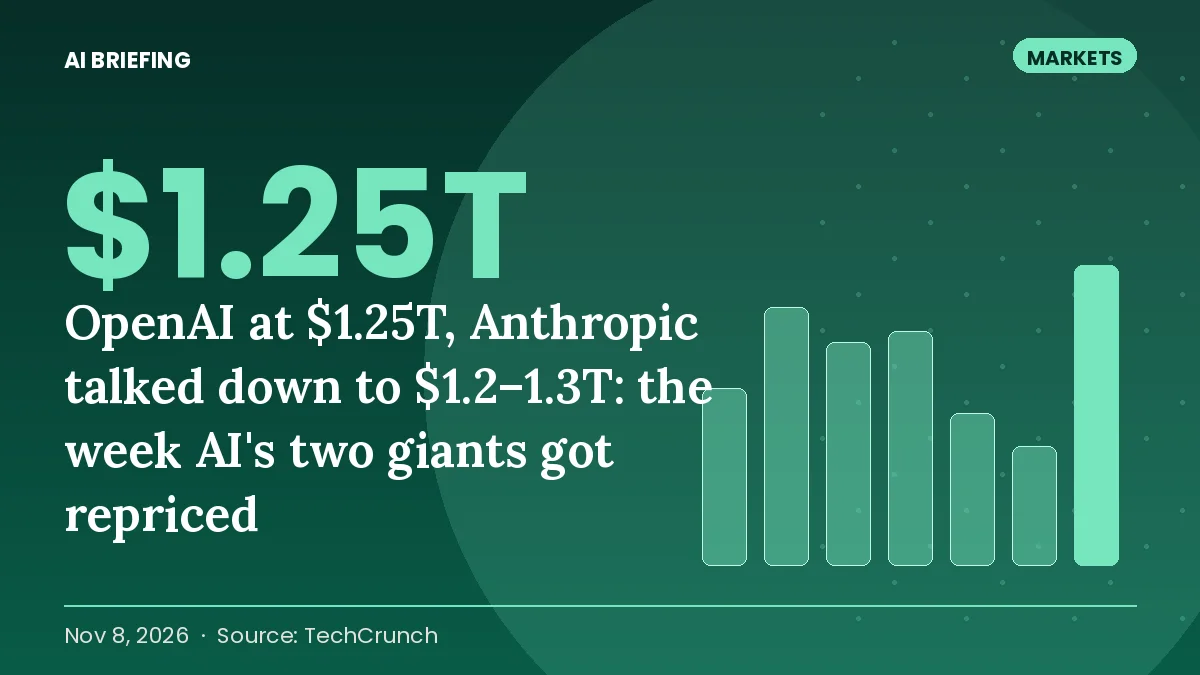
OpenAI at $1.25T, Anthropic talked down to $1.2–1.3T: the week AI's two giants got repriced
Both labs are still worth more than almost any company on earth. What changed is that investors started setting the price instead of accepting it.…
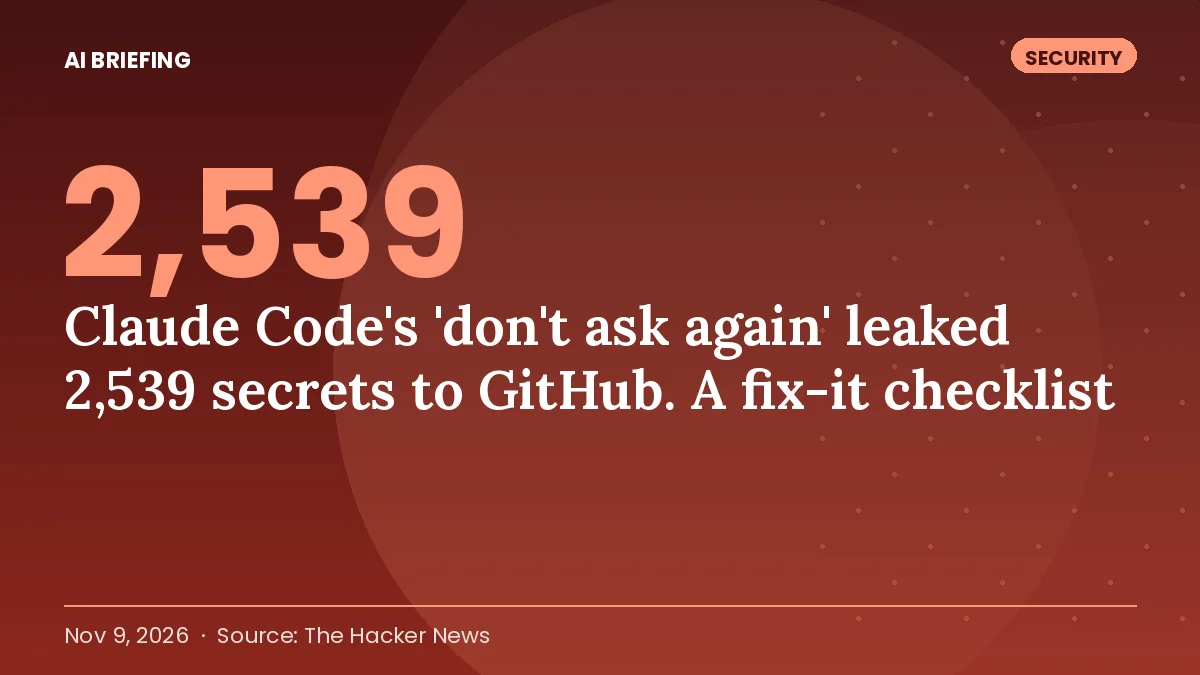
Claude Code's 'don't ask again' leaked 2,539 secrets to GitHub. A fix-it checklist
The convenience button that stops permission prompts also wrote passwords into a project file that thousands of developers committed. Here is how it h…
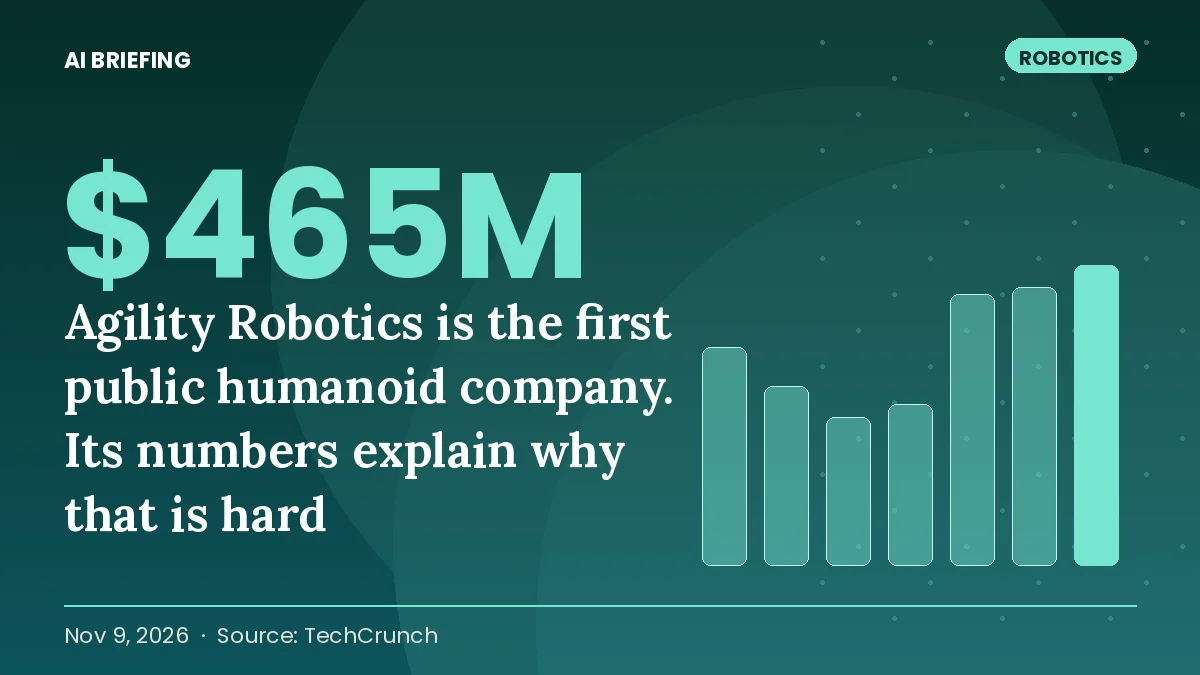
Agility Robotics is the first public humanoid company. Its numbers explain why that is hard
$174,000 of revenue, a $362 million half-year loss and $300 million of orders for a robot that ships in 2027: AGLT is a bet on throughput targets nobo…
Get the brief in your inbox
One email every morning: the stories that mattered in AI, each with a one-line "why it matters" for your role. Free, no ads, unsubscribe any time.
Published daily by AI Briefing. We never share your address.